


Most Popular Books
Cassie Harte
Follow to get improved recommendations.

Author Bio
What Cassie Harte writes toward: the moment a secret is spoken aloud
Cassie Harte’s work, as the titles make plain, turns on disclosure. Not confession for its own sake, not spectacle, but the hard pivot from silence to speech, the instant when a person decides that what happened will be named. In Harte’s books, the stakes are built into the phrasing: told, nobody told. These are verbs with witnesses implied, suggesting a world where information is withheld, where warnings don’t arrive in time, where the truth has to be carried alone until it can’t be.
Read as a small body of work, Cassie Harte books point toward memoir and testimony: narratives that move by memory and aftermath, ordering events so the reader can feel the pressure that made silence seem necessary, and the pressure that finally breaks it. The experience is intimate and direct. You’re not asked to admire cleverness. You’re asked to listen.
Memoir as record: plain titles, heavy implications
There’s a bluntness to Harte’s naming. I Did Tell, I Did reads like an answer to an accusation, a line repeated until it holds. It suggests the exhausting loop of not being believed, the need to say the same sentence again, slightly louder, slightly steadier, until it becomes undeniable.
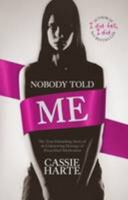
Nobody Told Me turns the lens a fraction. It’s not only about what the narrator said; it’s about what the narrator wasn’t given. The title carries a quiet inventory of missing guidance: the conversations that should have happened, the warnings that might have changed a decision, the adult attention that might have interrupted harm. The emotional weather is clear, not melodrama but the ache of preventable ignorance. In both titles, Harte places language at the center. Speech is the hinge. Silence is not neutral; it’s an active condition, imposed or learned.
The reading experience: urgency, clarity, and the weight of being unheard
Books like these work by accumulation. A memoir of betrayal doesn’t rely on a single shocking moment; it builds a pattern the reader can’t unsee. The titles hint at a long stretch of being dismissed, misread, or left to figure things out alone. The drama comes from recognition, the reader noticing how often the same dynamic repeats, how easily adults can fail a child, how a life can be shaped by what was said and what was refused.
Harte’s approach is less about ornament than about record. The emphasis is on clarity: who spoke, who listened, who didn’t. That clarity can feel bracing, and like relief, especially for readers who have lived with their own versions of "I did tell," the sentence that should have been enough. There’s also an implied argument under both titles: telling matters even when it doesn’t work in the moment. The act of speaking becomes a form of self-definition, a line drawn around the truth.
Why these titles linger
Some titles describe a plot. Harte’s describe a dispute. They sound like dialogue from a room where power is uneven: a child insisting, an adult deflecting; a grown narrator naming the absence of guidance. They don’t let the reader stay abstract. They push you into the human scene, a voice on one side of the table, a refusal on the other.
For readers drawn to memoir and survival, Cassie Harte offers a stark proposition: the story will be told, and the telling itself is part of what’s at stake. If you come to her books for catharsis, you may find something tougher and more useful, a careful insistence on what happened and on the consequences of not listening.
If you’re looking to buy Cassie Harte books, you can find affordable copies on ThriftBooks.
Copyright © 2026 Thriftbooks.com
Terms of Use | Privacy Policy | Do Not Sell/Share My Personal Information | Cookie Notice | Cookie Preferences | Accessibility Statement
ThriftBooks ® and the ThriftBooks ® logo are registered trademarks of Thrift Books Global, LLC
ThriftBooks ® and the ThriftBooks ® logo are registered trademarks of Thrift Books Global, LLC
