


Most Popular Books
Bryan Ardis
Follow to get improved recommendations.
Author Bio
A book that reads like a rebuttal
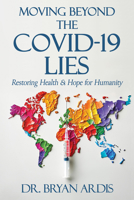
Bryan Ardis writes from inside the argument. The title alone, Moving Beyond the Covid-19 Lies: Restoring Health & Hope for Humanity, signals a project built on correction: naming what the author sees as false, then trying to replace it with an account of health, risk, and recovery. It walks straight into the room and starts sorting the story into what happened and what readers were told.
That sense of forward motion matters. “Moving beyond” suggests more than critique; it implies steps, a sequence, a way out. The second half of the title narrows the aim: not just to dispute, but to restore. “Health” is concrete; “hope” is harder to measure, but the pairing makes the book feel like it wants to be practical and morale-building at once.
What the book is doing on the page
The framing points to a familiar kind of reading experience: a guided tour through contested claims, with the author acting as interpreter. When a title uses the word “lies,” it’s making a promise about tone. Expect insistence, and a willingness to repeat key points until they stick. The argument is the engine, not a backdrop.
There’s also an implied audience: readers who feel whiplash from the last few years, from shifting guidance and headlines that seemed to contradict each other. The book positions itself less like a diary of the pandemic and more like a corrective manual. The emphasis is on interpretation: what to believe, what to question, and how to rebuild a sense of personal agency around health decisions.
Popular Bryan Ardis books
Inside the title: accusation, then repair
The title does two jobs at once. First, it draws a hard line: it claims there are “lies,” not just mistakes or miscommunications. Second, it tries to keep the reader from getting stuck in the outrage. “Moving beyond” is a directional phrase; it suggests the book will spend time on what comes after the debunking.
The subtitle, Restoring Health & Hope for Humanity, widens the lens. “Restoring” implies something taken away or damaged, and a return to an earlier baseline. “Humanity” changes the scale of the book’s ambition. This isn’t just about individual wellness routines; the subtitle hints at a broader claim about public health messaging and social response.
How to read it: as a guided argument
Books like this tend to reward a particular kind of attention. Rather than reading for plot, you read for structure: how the author builds a case, which claims are treated as foundational, which as consequences, and how the language pushes you toward certainty. The title suggests a sequence like a staircase: identify what it calls deception, name harms, then propose a way to recover.
It helps to notice the emotional rhythm implied by the phrasing. “Lies” activates indignation. “Restoring” shifts toward repair. “Hope” tries to land the book in a steadier place than suspicion alone. That arc, from accusation to reconstruction, is the experience the cover is selling. Whether or not a reader agrees with the premises, the book’s stance is clear: it wants the reader to feel less passive, replacing a fog of competing claims with a single, navigable account.
If you’re looking to buy Bryan Ardis books, you can find low-cost copies on ThriftBooks.
Copyright © 2026 Thriftbooks.com
Terms of Use | Privacy Policy | Do Not Sell/Share My Personal Information | Cookie Policy | Cookie Preferences | Accessibility Statement
ThriftBooks ® and the ThriftBooks ® logo are registered trademarks of Thrift Books Global, LLC
ThriftBooks ® and the ThriftBooks ® logo are registered trademarks of Thrift Books Global, LLC
