Most Popular Books
Series By A.R. Torre
A.R. Torre writes thrillers that like to start with a simple boundary, a room, a rule, a marriage, a job, and then worry at it until it frays. The titles alone suggest controlled spaces and controlled stories: a good lie that has to be maintained, a last secret that can’t stay buried, a narrator defined by a number and a letter. These are books that trade in proximity. People live close to one another, watch one another, keep score, and the danger often feels domestic, the kind that can pass for normal until it can’t. The reading experience is brisk and claustrophobic in the best way.
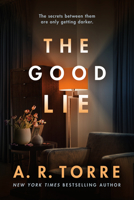
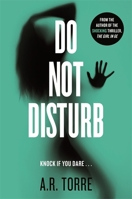
Many A.R. Torre books announce their engine right in the title. The Good Lie isn’t interested in the small everyday fib; it points to the larger kind, the lie that becomes a structure people live inside. The phrase carries its own moral argument, and the tension comes from watching that argument strain under pressure. Every Last Secret suggests accumulation, not one hidden thing but a whole inventory; the reader waits not for a single reveal but a cascade, each secret dragging another into the light. Even the blunt imperative of Do Not Disturb does double duty. It’s a sign on a door, but also a warning that can’t be enforced, and in Torre’s hands it feels less like a boundary and more like an invitation for the story to cross it.
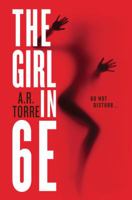
The title The Girl in 6E is a clean hook: a person defined by a location, reduced to a coordinate. It implies confinement and routine, and that the room itself matters, that the space has rules and those rules have consequences. The “6E” detail is specific enough to feel real, like an apartment number you might pass in a hallway. The larger umbrella of Deanna Madden signals a continuing focus on a single figure and the pressure of staying inside a life that may not be sustainable. A character-centered series invites a particular kind of suspense: not only what happens next, but what it costs to keep going.
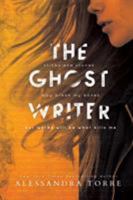
The Ghostwriter points straight at authorship, performance, and the uneasy gap between the name on the cover and the hands on the keyboard. Ghostwriting is already a kind of sanctioned deception, which makes it fertile ground for a thriller. The title suggests a book alert to voice: who is speaking, who is being ventriloquized, and what happens when the official version of events starts to wobble. That interest fits neatly beside the rest of Torre’s work. A lie, a secret, a closed door, a hidden writer, all variations on the same pressure point. Someone knows something, someone is shaping what can be known, and the suspense comes from the moment that control slips.
Torre’s work suits readers who enjoy a thriller that doesn’t sprawl. The setup tends to be clear, and the tension comes from proximity, emotional, physical, and social, narrowing toward a moment when someone will have to say the unsayable thing out loud. These are books for late-night reading, when you tell yourself one more chapter and then notice you’ve crossed another hour. If you’re looking to buy A.R. Torre books, you can find great low-cost copies on ThriftBooks.