


Abigail Shrier



Author Bio
Books that argue with the culture, not around it
Abigail Shrier’s nonfiction is built for readers who don’t want a soft-focus overview. Her titles arrive with their thesis already in the room, pointing to institutions, therapy, medicine, schools, parents, and asking what happens when adult systems meant to help start shaping childhood itself. These are books that move by claim and counterclaim, inviting you to pause on a paragraph and think, “Do I buy that?” Even when you disagree, the reading experience is direct: a line of argument, a set of stakes, and a willingness to press on the sore spots of public conversation.
Concerned, skeptical, and tuned to incentives
Across Abigail Shrier books, a few preoccupations recur. One is the gap between intention and outcome, the way a practice can begin as care and end as something else. Another is social reinforcement: how ideas spread, how identities harden, how adults signal approval, and how kids respond. Her work also reads as an argument about everyday authority, the expert in the room, the credential on the wall, the policy that becomes default. The questions are blunt. Are we helping? Are we making things worse? And if we are, why does the machine keep running?
When help becomes a script: Bad Therapy
Bad Therapy: Why the Kids Aren't Growing Up signals its target with unusual clarity. The phrase critiques not just a profession but a cultural habit, translating ordinary struggle into pathology and then treating that translation as progress. The subtitle tightens the focus: the cost is maturity itself, the slow gain of resilience and self-command. The reading experience is less parenting guide than cultural audit. Many adults want children to feel safe and supported; many children need room to be bored, to be wrong, to recover from a bad day without a permanent label attached. Shrier’s premise suggests a therapeutic lens can become a script kids learn to perform, and that performance, once rewarded, can crowd out other ways of being.
Identity, adolescence, and high stakes: Irreversible Damage
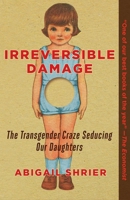
Irreversible Damage: The Transgender Craze Seducing Our Daughters is a title that doesn’t pretend neutrality. It frames its subject as a trend with momentum and outcomes that can’t be undone. Whatever a reader’s prior beliefs, the book positions itself as a warning about how adolescent experience can be interpreted, guided, and at times redirected by adults and institutions. The title suggests a collision of domains that don’t share the same language: family life, medicine, social belonging, and the internet’s capacity to accelerate imitation and certainty. The emphasis on persuasion and social pull implies a story that is not only personal but structural.
Choosing where to start
Side by side, these titles sketch a consistent posture: skeptical of fashionable certainty, alert to unintended consequences, and focused on where adult authority meets childhood vulnerability, with a shared interest in how narratives spread and who benefits when one interpretation becomes the default.
If you’re drawn to arguments about mental health culture, parenting norms, and the language adults use to explain children to themselves, Bad Therapy is the more general doorway. For a more narrowly framed controversy, at the intersection of adolescence, identity, and medicalized decision-making, Irreversible Damage is the sharper edge. Either way, Abigail Shrier books reward a reader who can hold two thoughts at once: empathy for individual struggle, and suspicion about systems that claim to solve it. If you’re looking to buy Abigail Shrier books, you can find low-cost copies on ThriftBooks.
ThriftBooks ® and the ThriftBooks ® logo are registered trademarks of Thrift Books Global, LLC
