
Skip to content
Scan a barcode
Scan
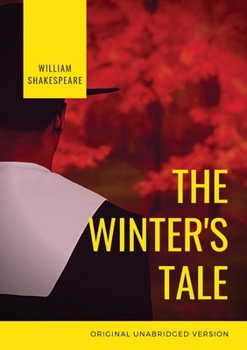
Paperback The Winter's Tale: a tragicomedy play by William Shakespeare Book

ISBN: 2382746807

ISBN13: 9782382746806

The Winter's Tale: a tragicomedy play by William Shakespeare

Select Format

Select Condition ThriftBooks Help Icon

Recommended

Format: Paperback

Condition: New

$18.43
Save $1.52!
List Price $19.95
50 Available
Ships within 2-3 days

Book Overview

The Winter's Tale is a play by William Shakespeare originally published in the First Folio of 1623. Although it was grouped among the comedies, many modern editors have relabelled the play as one of Shakespeare's late romances. Some critics consider it to be one of Shakespeare's "problem plays" because the first three acts are filled with intense psychological drama, while the last two acts are comedic and supply a happy ending.The play has been intermittently popular, revived in productions in various forms and adaptations by some of the leading theatre practitioners in Shakespearean performance history, beginning after a long interval with David Garrick in his adaptation Florizel and Perdita (first performed in 1753 and published in 1756). The Winter's Tale was revived again in the 19th century, when the fourth "pastoral" act was widely popular. In the second half of the 20th century, The Winter's Tale in its entirety, and drawn largely from the First Folio text, was often performed, with varying degrees of success.Following a brief setup scene the play begins with the appearance of two childhood friends: Leontes, King of Sicilia, and Polixenes, the King of Bohemia. Polixenes is visiting the kingdom of Sicilia, and is enjoying catching up with his old friend. However, after nine months, Polixenes yearns to return to his own kingdom to tend to affairs and see his son. Leontes desperately attempts to get Polixenes to stay longer, but is unsuccessful. Leontes then decides to send his wife, Queen Hermione, to try to convince Polixenes. Hermione agrees and with three short speeches is successful. Leontes is puzzled as to how Hermione convinced Polixenes so easily, and so he begins to suspect that his pregnant wife has been having an affair with Polixenes and that the child is Polixenes'. Leontes orders Camillo, a Sicilian Lord, to poison Polixenes. Camillo instead warns Polixenes and they both flee to Bohemia.He throws her in prison, over the protests of his nobles, and sends two of his lords, Cleomenes and Dion, to the Oracle at Delphos for what he is sure will be confirmation of his suspicions. Meanwhile, the queen gives birth to a girl, and her loyal friend Paulina takes the baby to the king, in the hopes that the sight of the child will soften his heart. He grows angrier, however, and orders Paulina's husband, Lord Antigonus, to take the child and abandon it in a desolate place. Cleomenes and Dion return from Delphos with word from the Oracle and find Hermione publicly and humiliatingly put on trial before the king. She asserts her innocence, and asks for the word of the Oracle to be read before the court. The Oracle states categorically that Hermione and Polixenes are innocent, Camillo is an honest man, and that Leontes will have no heir until his lost daughter is found. Leontes shuns the news, refusing to believe it as the truth. As this news is revealed, word comes that Leontes' son, Mamillius, has died of a wasting sickness brought on by the accusations against his mother. At this, Hermione falls in a swoon, and is carried away by Paulina, who subsequently reports the queen's death to her heartbroken and repentant husband. Leontes vows to spend the rest of his days atoning for the loss of his son, his abandoned daughter, and

Customer Reviews

5 ratings

A curious play

Early compilers of Shakespeare's plays classified this a comedy, but there is much tragedy in it. Later it was called a romance. Through irrational jealousy a king is apparently responsible for the deaths of his entire family -- wife, son and daughter -- by mid-play. Time is a character in the play and at his one appearance summarizes the passage of sixteen years. If you have an overy high regard for realism, you may not much enjoy this play, but that will be true of more of Shakespeare than just this one tale. I thoroughly enjoyed it. I look forward to seeing it. I've ordered the BBC DVD and it's being performed at the Oregon Shakespeare Festival in 2006. These Cambridge School editions have the play's text on right-hand pages; they have summary, commentary and exercises, and vocabulary on the facing left-hand pages. As I read through the play, I'd read the summary, read the play text paying attention to vocabulary, and then read the commentary and exercises. Some additional, unusual vocabulary was only explained in the commentary. I felt I got a deeper understanding of the play than if I had just read the play proper.mmary, commentary and exercises, and vocabulary on the facing left-hand pages. As I read through the play, I'd read the summary, read the play text paying attention to vocabulary, and then read the commentary and exercises. Some additional, unusual vocabulary was only explained in the commentary. I felt I got a deeper understanding of the play than if I had just read the play proper.

A Redemptive Tragedy

The Winter's Tale is a lot of things: heart-breaking, exhilerating, funny, beautiful, romantic, profound, etc. Yeah, it's all here. This is one of the bard's best plays, and I can't believe they don't teach this in schools. Of course, the ones they teach are excellent, but I can see high school kids enjoying this one a lot more than some of those others (Othello, King Lear). The story is, of course, brilliant. King Leontes goes into a jealous rage at the beginning against his wife Hermione. Leontes is very mistaken in his actions, and the result is tragic. Shakespeare picks the story back up sixteen years later with the children, and the story works to a really, really surprising end of bittersweet redemption.This is one of Shakespeare's bests. The first half is a penetrating and devestating, but the second half shows a capacity for salvation from the depths of despair. Also, this being Shakespeare, the blank verse is gorgeous and the characters are well drawn, and the ending is a surprise unparalleled in the rest of his plays. The Winter's Tale is a truly profound and entertaining read.

The Terrible Costs of Jealous Rage

The Winter's Tale contains some of the most technically difficult solutions to telling a story that have ever appeared in a play. If you think you know all about how a play must be constructed, read The Winter's Tale. It will greatly expand your mind.The play opens near the end of a long visit by Polixenes, the king of Bohemia, to the court of his childhood friend, Leontes, the king of Sicily. Leontes wants his friend to stay one more day. His friend declines. Leontes prevails upon his wife, Hermione, to persuade Polixenes. Hermione does her husband's bidding, having been silent before then. Rather than be pleased that she has succeeded, Leontes goes into a jealous rage in which he doubts her faithfulness. As his jealousy grows, he takes actions to defend his misconceptions of his "abused" honor that in fact abuse all those who have loved him. Unable to control himself, Leontes continues to pursue his folly even when evidence grows that he is wrong. To his great regret, these impulsive acts cost him dearly. Three particular aspects of the play deserve special mention. The first is the way that Shakespeare ties together actions set 16 years apart in time. Although that sounds like crossing the Grand Canyon in a motorcycle jump, Shakespeare pulls off the jump rather well so that it is not so big a leap. The second is that Shakespeare captures entirely different moods from hilarious good humor to deep depression and remorse closely adjacent to one another. As a result, the audience is able to experience many more emotions than normally are evoked in a single play. Third, the play's final scene is as remarkable a bit of writing as you can imagine. Read it, and marvel!After you finish reading this play, think about where your own loss of temper has had bad consequences. How can you give yourself time to get under control before acting rashly? How can you learn to be more open to positive interpretations of events, rather than dark and disturbing ones? Love first, second, and always!

Billy Boy's GREATEST Play!!!!!

This play, in my opinion, is Shakespeare's greatest. It doesn't have the great quotes or the great characters or the action of many of his plays, but it has a 'Surprise Twist' which caused chills to run through my entire body. I read ALL of Shakespeare's plays and 'The Winter's Tale' is the ONLY one which shocked me at the end, took my breath away, and sent chills through my body. If you read only one Shakespeare play, make it 'The Winter's Tale'. I am so surprised that nobody ever recommended this play to us when we were in school. People just talk about Hamlet, Macbeth, Othello, King Lear, and Romeo and Juliet, but 'The Winter's Tale' beats them all. Read it!!! You WON'T be disappointed.

My personal favorite of Shakespeare's plays

For me The Winter's Tale is the most satisfying of Shakespeare's plays. And why? It may not be Hamlet for tragedy, it may not be Twelfth Night for comedy -- indeed, perhaps in the great objective sense this is not nearly his best; but as a coherent work this has them all beat. Here we find all sides of Shakespeare's genius on display: Leontes shares his intense sexual jealousy with Othello, and Florizel and Perdita take their light-hearted romantic comedy interplay (complete with disguises and recogntions) from the best of Shakespeare's comedies, before his sense of the romantic soured into the bitter genius of the problem plays. Add that to the eerily lyrical poetry of Act IV, and you've got a masterpiece. The Winter's Tale is laugh-out-loud funny at times; it's ribald; it's profoundly tragic; and in the end, it's a look at the craft of theater, the craft of literature and ultimately the craft of living. Unjustly ignored, The Winter's Tale is easily as good as its immediate successor, The Tempest -- and that's high praise indeed.
Copyright © 2025 Thriftbooks.com Terms of Use | Privacy Policy | Do Not Sell/Share My Personal Information | Cookie Policy | Cookie Preferences | Accessibility Statement
ThriftBooks ® and the ThriftBooks ® logo are registered trademarks of Thrift Books Global, LLC

GoDaddy Verified and Secured