


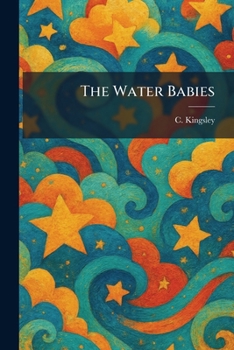
The Water Babies


Select Format
Select Condition 
Book Overview
"The Water Babies" is a captivating Victorian fairy tale that follows the extraordinary journey of Tom, a young chimney sweep escaping a life of hardship and soot. After falling into a river, Tom undergoes a miraculous transformation into a tiny underwater creature known as a water-baby. In this magical aquatic realm, he encounters a variety of mystical beings and animals, embarking on a series of adventures that serve as a profound moral and spiritual education.
Written by Charles Kingsley, this classic work of children's literature blends whimsical fantasy with sharp social commentary. It addresses themes of redemption, self-improvement, and the Victorian fascination with natural history. Through Tom's encounters with figures like Mrs. Doasyouwouldbedoneby and Mrs. Bedonebyasyoudid, the narrative explores the importance of kindness, discipline, and personal growth. "The Water Babies" remains a landmark of the Golden Age of Children's Literature, celebrated for its imaginative scope and its enduring message about the transformative power of the human spirit and the wonders of the natural world.
This work has been selected by scholars as being culturally important, and is part of the knowledge base of civilization as we know it. This work was reproduced from the original artifact, and remains as true to the original work as possible. Therefore, you may see the original copyright references, library stamps (as most of these works have been housed in our most important libraries around the world), and other notations in the work.
This work is in the public domain in the United States of America, and possibly other nations. Within the United States, you may freely copy and distribute this work, as no entity (individual or corporate) has a copyright on the body of the work.
As a reproduction of a historical artifact, this work may contain missing or blurred pages, poor pictures, errant marks, etc. Scholars believe, and we concur, that this work is important enough to be preserved, reproduced, and made generally available to the public. We appreciate your support of the preservation process, and thank you for being an important part of keeping this knowledge alive and relevant.
Customer Reviews
Water Babies' illustrations
A wonderful fairy tale
The Water Babies
British Fairy Tale: Ahead Of Its Time
It will finally be reprinted!
ThriftBooks ® and the ThriftBooks ® logo are registered trademarks of Thrift Books Global, LLC
