


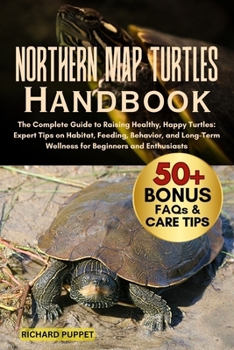
Northern Map Turtles Handbook: The Complete Guide to Raising Healthy, Happy Turtles: Expert Tips on Habitat, Feeding, Behavior, and Long-Term Wellness
No Customer Reviews

The Northern Map Turtle (Graptemys geographica) is a fascinating freshwater species native to North America, particularly the eastern and central regions of the United States and parts of southern Canada. Named for the intricate, map-like lines that decorate its carapace (top shell), this turtle is admired for its unique appearance, active nature, and semi-aquatic lifestyle. These turtles are part of the Emydidae family and are one of several species within the Map Turtle group.
Northern Map Turtles are primarily riverine species, meaning they naturally inhabit rivers and large streams, although they can also be found in lakes and ponds. They prefer habitats with clean, flowing water and plenty of basking spots such as logs, rocks, or floating platforms. Their need for both aquatic and terrestrial environments makes them intriguing but somewhat demanding pets.
One of the most distinctive traits of the Northern Map Turtle is its sexual dimorphism. Females are significantly larger than males, sometimes more than twice their size. Adult females can reach shell lengths of 7 to 10.5 inches, while males generally max out around 3.5 to 6 inches. This size difference also influences their behavior, diet, and care requirements, making it essential for potential keepers to understand the differences between the sexes before bringing one home.
Their carapace is typically olive to brown with light yellow or green lines, mimicking a topographical map. These markings fade slightly with age but remain visible, contributing to the turtle's enduring charm. In addition to their shell, their skin is adorned with similar fine lines and bright patterns, usually in yellow or greenish hues, which run along the neck, limbs, and head.
Northern Map Turtles are generally shy and will quickly dive into the water when startled. However, with time and consistent, gentle interaction, they can become accustomed to their keepers and may even learn to recognize them, especially during feeding times. Despite their timidity, they are active swimmers and spend a good portion of their day basking when not swimming or foraging for food.
In the wild, their diet consists of aquatic invertebrates, insects, small fish, and aquatic vegetation. Females, due to their larger size and stronger jaws, are more capable of consuming hard-shelled prey like snails and crayfish, while males stick to softer fare. This dietary preference must be taken into account in captivity to ensure proper nutrition and health.
As pets, Northern Map Turtles can thrive under the right conditions but are not ideal for beginners due to their specific environmental and dietary needs. They require a well-maintained aquatic setup, consistent water quality, access to UVB lighting, and a proper basking area. These turtles are not suited for small tanks or environments lacking strong filtration and should not be considered low-maintenance animals.
In terms of lifespan, Northern Map Turtles can live for several decades-often 20 to 30 years or more with excellent care. Their long life span, coupled with their unique personalities and beautiful markings, makes them a rewarding but long-term commitment for any turtle enthusiast.
Understanding the natural history, behavior, and physical characteristics of the Northern Map Turtle lays the groundwork for providing proper care. In the following chapters, we'll explore their environment, health needs, diet, and much more to ensure a healthy and happy life in captivity.
Northern Map Turtles are primarily riverine species, meaning they naturally inhabit rivers and large streams, although they can also be found in lakes and ponds. They prefer habitats with clean, flowing water and plenty of basking spots such as logs, rocks, or floating platforms. Their need for both aquatic and terrestrial environments makes them intriguing but somewhat demanding pets.
One of the most distinctive traits of the Northern Map Turtle is its sexual dimorphism. Females are significantly larger than males, sometimes more than twice their size. Adult females can reach shell lengths of 7 to 10.5 inches, while males generally max out around 3.5 to 6 inches. This size difference also influences their behavior, diet, and care requirements, making it essential for potential keepers to understand the differences between the sexes before bringing one home.
Their carapace is typically olive to brown with light yellow or green lines, mimicking a topographical map. These markings fade slightly with age but remain visible, contributing to the turtle's enduring charm. In addition to their shell, their skin is adorned with similar fine lines and bright patterns, usually in yellow or greenish hues, which run along the neck, limbs, and head.
Northern Map Turtles are generally shy and will quickly dive into the water when startled. However, with time and consistent, gentle interaction, they can become accustomed to their keepers and may even learn to recognize them, especially during feeding times. Despite their timidity, they are active swimmers and spend a good portion of their day basking when not swimming or foraging for food.
In the wild, their diet consists of aquatic invertebrates, insects, small fish, and aquatic vegetation. Females, due to their larger size and stronger jaws, are more capable of consuming hard-shelled prey like snails and crayfish, while males stick to softer fare. This dietary preference must be taken into account in captivity to ensure proper nutrition and health.
As pets, Northern Map Turtles can thrive under the right conditions but are not ideal for beginners due to their specific environmental and dietary needs. They require a well-maintained aquatic setup, consistent water quality, access to UVB lighting, and a proper basking area. These turtles are not suited for small tanks or environments lacking strong filtration and should not be considered low-maintenance animals.
In terms of lifespan, Northern Map Turtles can live for several decades-often 20 to 30 years or more with excellent care. Their long life span, coupled with their unique personalities and beautiful markings, makes them a rewarding but long-term commitment for any turtle enthusiast.
Understanding the natural history, behavior, and physical characteristics of the Northern Map Turtle lays the groundwork for providing proper care. In the following chapters, we'll explore their environment, health needs, diet, and much more to ensure a healthy and happy life in captivity.
Format:Paperback
Language:English
ISBN:B0FNKFTL8R
ISBN13:9798299107418
Release Date:August 2025
Publisher:Independently Published
Length:156 Pages
Weight:0.48 lbs.
Dimensions:0.3" x 6.0" x 9.0"
Customer Reviews
0 rating
Copyright © 2025 Thriftbooks.com
Terms of Use | Privacy Policy | Do Not Sell/Share My Personal Information | Cookie Policy | Cookie Preferences | Accessibility Statement
ThriftBooks ® and the ThriftBooks ® logo are registered trademarks of Thrift Books Global, LLC
ThriftBooks ® and the ThriftBooks ® logo are registered trademarks of Thrift Books Global, LLC
