


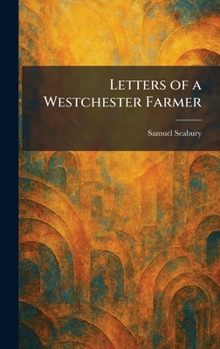
Letters of a Westchester Farmer

"Letters of a Westchester Farmer (1774-1775)" is a seminal collection of political pamphlets written by Samuel Seabury, an influential Loyalist and clergyman, during the pivotal years leading up to the American Revolutionary War. Writing under the pseudonym "A. W. Farmer," Seabury provides a compelling and articulate defense of the British Crown, arguing against the actions of the Continental Congress and the burgeoning revolutionary movement.
These letters offer a rare and significant perspective on the internal divisions within the American colonies. Through sharp prose and reasoned argumentation, Seabury addresses the economic and political consequences of non-importation agreements and the potential for civil unrest. The work is not only a historical record of the Loyalist sentiment in New York but also a masterclass in 18th-century political polemics. "Letters of a Westchester Farmer (1774-1775)" remains an essential resource for scholars and readers interested in the complexities of the American Revolution, the intellectual history of the colonial period, and the diverse voices that shaped the founding of the United States.
This work has been selected by scholars as being culturally important, and is part of the knowledge base of civilization as we know it. This work was reproduced from the original artifact, and remains as true to the original work as possible. Therefore, you may see the original copyright references, library stamps (as most of these works have been housed in our most important libraries around the world), and other notations in the work.
This work is in the public domain in the United States of America, and possibly other nations. Within the United States, you may freely copy and distribute this work, as no entity (individual or corporate) has a copyright on the body of the work.
As a reproduction of a historical artifact, this work may contain missing or blurred pages, poor pictures, errant marks, etc. Scholars believe, and we concur, that this work is important enough to be preserved, reproduced, and made generally available to the public. We appreciate your support of the preservation process, and thank you for being an important part of keeping this knowledge alive and relevant.
Customer Reviews
ThriftBooks ® and the ThriftBooks ® logo are registered trademarks of Thrift Books Global, LLC
