


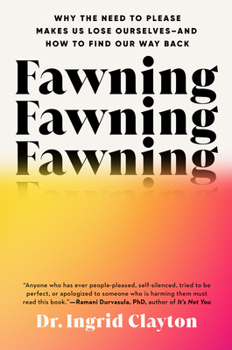
Fawning: Why the Need to Please Makes Us Lose Ourselves--And How to Find Our Way Back


Select Format
Select Condition 
Book Overview
From a clinical psychologist and expert in complex trauma recovery comes a powerful guide introducing fawning, an often-overlooked piece of the fight-flight-freeze reaction to trauma--explaining what it is, why it happens, and how to help survivors regain their voice and sense of self. Most of us are familiar with the three F's of trauma--fight, flight, or freeze. But psychologists have identified a fourth, extremely common (yet little-understood) response: fawning. Often conflated with "codependency" or "people-pleasing," fawning occurs when we inexplicably draw closer to a person or relationship that causes pain, rather than pulling away. Do you apologize to people who have hurt you?Ignore their bad behavior?Befriend your bullies?Obsess about saying the right thing?Make yourself into someone you're not . . . while seeking approval that may never come?
You might be a fawner. Fawning explains why we stay in bad jobs, fall into unhealthy partnerships, and tolerate dysfunctional environments, even when it seems so obvious to others that we should go. And though fawning serves a purpose--it's an ingenious protective strategy in unsafe situations--it's a problem if it becomes a repetitive, compulsory reaction in our daily lives. But here's the good news: we can break the pattern of chronic fawning, once we see it for the trauma response it is. Drawing on twenty years of clinical psychology work--as well as a lifetime of experience as a recovering fawner herself--Dr. Ingrid Clayton demonstrates WHY we fawn, HOW to recognize the signs of fawning (including taking blame, conflict avoidance, hypervigilance, and caretaking at the expense of ourselves), and WHAT we can do to successfully "unfawn" and finally be ourselves, in all our imperfect perfection.
You might be a fawner. Fawning explains why we stay in bad jobs, fall into unhealthy partnerships, and tolerate dysfunctional environments, even when it seems so obvious to others that we should go. And though fawning serves a purpose--it's an ingenious protective strategy in unsafe situations--it's a problem if it becomes a repetitive, compulsory reaction in our daily lives. But here's the good news: we can break the pattern of chronic fawning, once we see it for the trauma response it is. Drawing on twenty years of clinical psychology work--as well as a lifetime of experience as a recovering fawner herself--Dr. Ingrid Clayton demonstrates WHY we fawn, HOW to recognize the signs of fawning (including taking blame, conflict avoidance, hypervigilance, and caretaking at the expense of ourselves), and WHAT we can do to successfully "unfawn" and finally be ourselves, in all our imperfect perfection.
Format:Hardcover
Language:English
ISBN:B0DPZ3D78B
ISBN13:9798217045327
Release Date:September 2025
Publisher:G.P. Putnam's Sons
Length:304 Pages
Weight:1.36 lbs.
Dimensions:1.1" x 6.3" x 9.2"
Customer Reviews
1 rating
OK-ish, but very basic (and some other issues)
Published by Mandy , 22 days ago
At first I thought I was sent a bootleg version of the original book because there are SEVERAL typos in the book, but no, it was a legit version of it. Anyway, I am a therapist and was hoping this would be a good book for clients to read as an adjunct to talking about fawning in relationships etc as discussed in therapy. However, the book is just basic psychoeducation with examples, which is part of the process to even begin the discussion, so I did not find it as helpful as I would have liked and went with other bibliotherapies. I did however donate this book to a local DV shelter who asked for it when I emailed them.
Copyright © 2026 Thriftbooks.com
Terms of Use | Privacy Policy | Do Not Sell/Share My Personal Information | Cookie Notice | Cookie Preferences | Accessibility Statement
ThriftBooks ® and the ThriftBooks ® logo are registered trademarks of Thrift Books Global, LLC
ThriftBooks ® and the ThriftBooks ® logo are registered trademarks of Thrift Books Global, LLC
