|
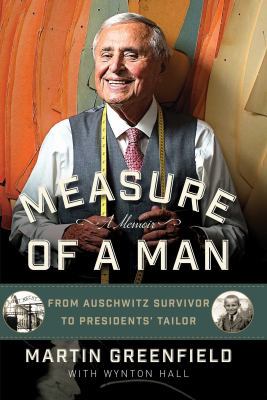
Stock image - cover art may vary
| Format: |
Hardcover |
| ISBN: |
0060531126 |
| ISBN-13: |
9780060531126 |
| Publisher: |
HarperCollins |
| Release Date: |
October, 2004 |
| Length: |
368 Pages |
| Weight: |
Unavailable |
| Dimensions: |
9.1 X 6.2 X 1.3 inches |
| Language: |
English |
|
|
| |
|
|
| |
|
|
|
|
1812: The War That Forged a Nation
by Walter R. Borneman
|
| From
|
| $7.49 |
Free Shipping
in the USA |
List Price: $29.94 Amazon.com Save $22.45 (75% off)
|
In June 1812 the still-infant United States had the audacity to declare war on the British Empire. Fought between creaking sailing ships and armies often led by bumbling generals, the ensuing conflict featured a tit-for-tat "You burned our capital, so we'll burn yours" and a legendary battle unknowingly fought after the signing of a peace treaty. D... Read more
In June 1812 the still-infant United States had the audacity to declare war on the British Empire. Fought between creaking sailing ships and armies often led by bumbling generals, the ensuing conflict featured a tit-for-tat "You burned our capital, so we'll burn yours" and a legendary battle unknowingly fought after the signing of a peace treaty. During the course of the war, the young American navy proved its mettle as the USS Constitution, "Old Ironsides," sent two first-rate British frigates to the bottom, and a twenty-seven-year-old lieutenant named Oliver Hazard Perry hoisted a flag exhorting, "Don't Give Up the Ship," and chased the British from Lake Erie. By 1814, however, the United States was no longer fighting for free trade, sailors' rights, and as much of Canada as it could grab, but for its very existence as a nation. With Washington in flames, only a valiant defense at Fort McHenry saved Baltimore from a similar fate. Here are the stories of commanding generals such as America's Henry "Granny" Dearborn, double-dealing James Wilkinson, and feisty Andrew Jackson, as well as Great Britain's gallant Sir Isaac Brock, overly cautious Sir George Prevost, and Rear Admiral George Cockburn, the man who put the torch to Washington. Here too are those inadvertently caught up in the war, from heroine farm wife Laura Secord, whom some call Canada's Paul Revere, to country doctor William Beanes, whose capture set the stage for Francis Scott Key to write "The Star-Spangled Banner." 1812: The War That Forged a Nation presents a sweeping narrative that emphasizes the struggle's importance to America's coming-of-age as a nation. Though frequently overlooked between the American Revolution and the Civil War, the War of 1812 did indeed span half a continent -- from Mackinac Island to New Orleans, and Lake Champlain to Horseshoe Bend -- and it paved the way for the conquest of the other half. During the War of 1812, the United States cast aside its cloak of colonial adolescence and -- with both humiliating and glorious moments -- found the fire that was to forge a nation. Read less
| Buy Now |
Filter by
|
Shipping Prices |
|
 |
Faster Shipping
Get the book faster by selecting the nearest location
Better Prices
Save an extra 50 cents on every additional book ordered from the same location
Savings Icon
 |
Once you add a book to your cart, we’ll make
it easy to find additional books from the same location by placing our savings icon
next to the book price |
|
|
|
|
|
|
|
5
5
Customer Reviews
|
|
|
|
Excellent book to begin learning about the War of 1812 |
|
 |
|
Posted by Greg Gramza on 12/28/2005 |
|
I picked up this book to learn more about the gap in time between my favorite segments of American history: colonial/Revolutionary history and the Civil War. I only knew bits and pieces from my visits to New Orleans, Baltimore, and D.C. (where a trace of fire damage can still be seen on the White House). This book stringed everything together very well from W.H. Harrison's battles in Ohio to New Orleans and provided a larger and more panoramic view of other events that helped set the stage for this conflict (e.g. Aaron Burr and General Wilkinson's antics, etc.). The book was easy to read and provided enough information to generally understand what happened. The only negative comment is the lack of maps within the book. Some maps are present in the book, from general "theater of action" maps to a battlefield map of New Orleans. But, I really think it would have been more effective to provide battlefield maps for each discussion of the various battles. For some reason, the last 2-3 books I've read about the Revolution or, in this case, the War of 1812 seem to lack that element that so many comparible Civil War books put to good use.
|
|
|
|
|
|
Cogent, readable and enlightening |
|
 |
|
Posted by G. Meyers on 12/09/2004 |
|
1812 is a riveting account of a dangerous time in our country's history. For a nation only 20 years of age, one whose economic health was so dependent on overseas commerce, to emback so impetuously in a war with the world's greatest maritime power--a power who nearly was succesful in stillbirthing the nations's inception--seems foolhardy at best. The justifiable goals of war: impressmant of U.S. citizens for duty on Her Majesty's ships, the equally unreasonable Orders in Council, that forced the world's seagoing traders to pay protection to the crown, was laudable. But the American rallying cry for Canadian lands today smacks of hypocrisy, given our colonial past, and Jefferson's embargos caused more financial pain --self-inflicted-- than any policy Great Britain had imposed. As with the Revolution, this war put our national life fully on the line. In 1812, grievances that might have been successfully addressed with patience and diplomacy in the end, through war, built a national character--a sense of collective state's self-- that indeed forged a union that made the coming civil dispute a two-party war and not chaos between 18? states. I knew none of this, appreciated none of the fragility of our fledgling union before reading this book. Borneman writes compellingly, conversationally, and has a tremendous capacity for building a broader context for events and personalities that ultimately makes sense for what might otherwise be a cocophany of battles, places and people. I highly recommend 1812 The War That Forged a Nation for anyone wanting to add depth to their picture of our nation's formative years. The book belongs on the same shelf as McCullough's John Adams, Ambrose's Lewis and Clark, and Franklin's biography.
|
|
|
|
|
|
The Why, What Happened, and After Effects |
|
 |
|
Posted by John Matlock on 10/30/2004 |
|
Lost between the Revolution and the Civil War, the war of 1812 has always seemed to me to have been a somewhat silly kind of war. This new book does an excellent job of explaining the why as well as the what happened. No less important was the after effect of the war. As a result of this war, the United States was no longer a group of eighteen states but a country. And it was a country that turned its eyes westward to building a nation where before was the Louisiana Purchase. This book is sub-Titled: The War That Forged a Nation. After this, the European powers paid much more attention to these ex-British colonies. The famous Battle of New Orleans was fought after the signing of the Peace Treaty. Little known is that the treaty provided for peace to be established in phases as the distance from Ghent (Belgium) increased. So while the treaty had been signed, the war was still going on in New Orleans because the sailing ships of the day hadn't had time to get there. It was reading the Treaty of Ghent (on a slow boat with a limited library) that C. S. Forester came up with the idea of a story based on changing orders being given to a ship captain as new orders cought up with him. This fictional ship captain was Horatio Hornblower.
|
|
|
|
|
|
Finally, an A in History. |
|
 |
|
Posted by R. O. RICHARDSON on 10/18/2004 |
|
Why can't history text books be this well written? If they were, I and most of my fellow citizens might not be so pathetically ignorant about our American heritage! 1812, The War That Forged A Nation by Walter R. Borneman is an historical account that weaves in the passion and intrigue of our forefathers to create a tapestry of human drama. With the detail of an historical researcher and the skill of a story-teller, the author presents the reader with a living, breathing understanding of this event. An enjoyable and informative read, that I highly recommend.
|
|
|
|
|
|
Splendid Popular Account on the War or 1812 |
|
 |
|
Posted by John Kwok on 03/02/2005 |
|
Author Walter Borneman follows successfully in the footsteps of David McCullough and Stephen Ambrose in writing this highly readable, popular account of the War of 1812. Indeed, "1812: The War That Forged A Nation" is not only the best popular account I have read on this war, but is one of the finest popular histories on the early history of the United States I have encountered so far. To his credit, Borneman traces the origins of the war back to Aaron Burr's infamous conspiracy to create a new "Western Empire" in the frontier country of Ohio and the remainder of the Northwest Territory, and the desires of some Westerners eager to add Canada and Florida to the United States. Perhaps these, more so than British impressment of American sailors, were the root causes behind the War of 1812, which Borneman implies in the opening chapters of the book. And he reveals - at least to me - a hitherto unknown dimension of the war itself, noting how close both the United States Congress and President James Madison came to not declaring war against Great Britain. Once war is declared, Borneman does an elegant job describing all of the major campaigns in Canada and along the western and southern frontiers; he correctly notes the bravery of Canadians defending themselves from the American invaders as well as the gross incompetence of most American generals, with the notable exceptions of Brown, Scott, and especially, Jackson. He also makes a very persuasive case that the American victory at the Battle of Lake Champlain was the most important naval battle of the war, not the Battle of Lake Erie or any of the brilliant frigate duels won by the likes of Captains Hull and Decatur. He also provides sympathetic portrayals of British generals such as Brock and Ross during their respective campaigns in the Great Lakes and Maryland (And yet, I can't help but notice just how incompetent much of the British military - as well as American military - leadership was during the conduct of this war.). I found this splendid one volume history of the War of 1812 hard to put down.
|
|
|
|
|
|